2026-10-10 · Mike Ellison
Hail Damage vs. Normal Wear: How to Tell the Difference
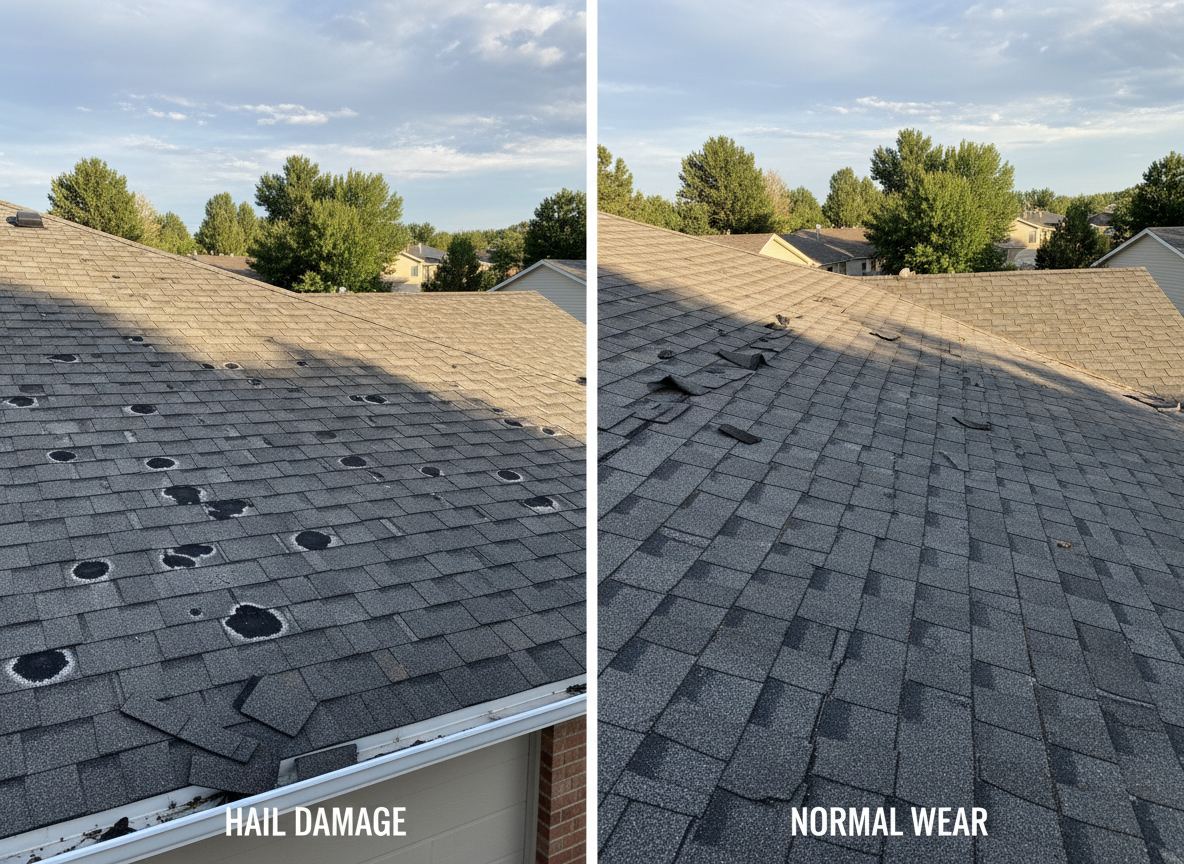
Hail damage appears as concentrated circular patches of missing granules and soft dents on shingles while normal wear shows even thinning and cracking across the entire surface after 15–20 years of exposure in Arvada's semi-arid climate.
Spotting Hail Impact Marks in Local Neighborhoods
In Olde Town Arvada and Ralston Creek, homes built before 1980 often carry three-tab shingles that reveal hail hits as 1–3 inch round areas where granules have been knocked loose in clusters rather than scattered evenly. These marks concentrate on south and west slopes that face incoming storms rolling in from the foothills near Golden. Normal wear instead produces uniform fading and edge curling from decades of daily sun exposure and temperature swings between 20°F winter nights and 90°F summer days. Walk the roof after a storm and look for soft spots underfoot where hail has bruised the mat without breaking through yet. Such localized bruising frequently leads to water intrusion at nail heads within one season if left unchecked.
How Normal Aging Differs on West Arvada Roofs
West Arvada neighborhoods with homes from the 1990s onward see normal wear begin at the ridge caps and valleys first, where UV and wind gradually erode the protective coating over 12–18 years. Granule loss here spreads gradually across the field rather than forming the random coin-sized craters typical of hail. Jefferson County summers bring intense sun that accelerates this even wear, while winter chinook winds add abrasion without the sudden dents hail produces. Homeowners can compare attic insulation stains; hail-related leaks start at isolated points while age-related leaks follow valley lines or chimney flashings. Checking both slopes and comparing them side by side reveals whether damage is uniform or patchy.
When Hail Leads to Roof Leak Repair Needs
Once hail fractures the shingle surface, water finds entry points faster during Arvada's occasional heavy spring rains, turning small dents into active leaks within months. Hail Damage Roof Repair addresses these spots by replacing affected sections rather than entire slopes when caught early. In contrast, normal wear eventually requires broader shingle replacement once the mat begins to curl and split. Local terrain near Majestic View Nature Center funnels wind-driven hail at steeper angles, increasing damage on exposed gables. Tracking storm dates helps separate sudden hail events from gradual aging.
Insurance and Documentation Steps
Document hail versus wear with dated photos from multiple angles before contacting your carrier, as policies in Denver metro often separate covered sudden damage from uncovered maintenance. Does Homeowners Insurance Cover Roof Leaks? (Claims Guide) outlines what adjusters look for in Jefferson County claims. Measure granule loss areas in square feet and note any soft spots that could allow water past the underlayment. Clear photos of both damaged and undamaged sections strengthen the distinction between storm impact and age-related decline.
Preventing Further Issues After Identification
Once the difference is clear, schedule a full inspection to check for hidden leaks under hail-bruised areas before next season's snowmelt. How Chinook Winds and Hail Damage Roofs in Arvada explains how repeated wind events compound small hail marks into larger problems. Homes near Arvada Center for the Arts often share similar roof ages, making neighborhood comparisons useful when deciding between spot repairs and full replacement. Addressing identified hail damage promptly keeps minor granule loss from becoming active Roof Leak Repair calls during summer thunderstorms.